


Listen on Apple Podcasts | Listen on Spotify | Listen on Stitcher
Homeschooling is a journey filled with doubts, triumphs, and a hefty dose of self-reflection. One of the most common questions new homeschool parents ask is, “Am I really qualified to teach my child without a teaching degree?”
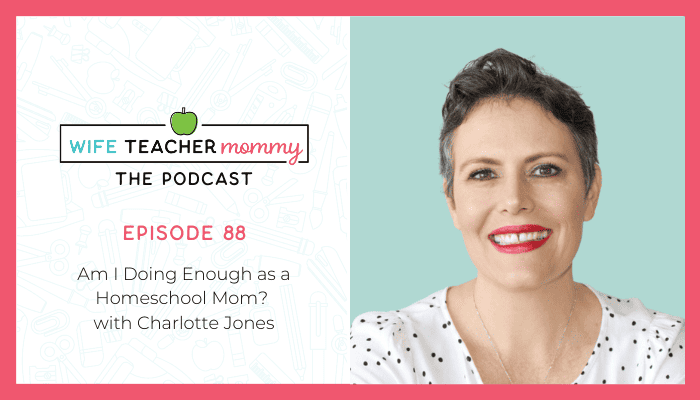
In this enlightening conversation with Charlotte Jones, former teacher turned homeschool mom Kelsey Sorenson unpacks this question, shares mindset strategies, and offers practical tips to help homeschoolers feel confident and supported.
Many parents worry they’re unqualified to homeschool if they lack formal teaching credentials. Kelsey, a former teacher herself, reassures parents that a teaching degree isn’t a prerequisite for success.
“Homeschooling doesn’t have to look like school at home,” she explains. In fact, parents who aren’t trained as teachers may even find it easier to embrace the flexibility of homeschooling. While teachers may rely on standards and structured schedules, homeschool parents can tailor learning to their children’s individual needs.
“You have the advantage of one-on-one time with your child,” Kelsey emphasizes. “That’s something a teacher with a classroom full of kids simply can’t provide.”
Embarking on the homeschool journey can bring up a lot of mindset challenges, from fear of judgment to concerns about curriculum choices. Kelsey sees these challenges as opportunities for growth.
“When mindset issues arise, it’s a chance to work on them—for yourself and your kids,” she says. She stresses the importance of self-coaching and self-compassion, especially on tough days.
Her advice? “Give yourself more credit than criticism and more grace than judgment. The harder the day, the more grace you should give yourself.”
It’s easy to feel like you’re not doing enough as a homeschool parent, but Kelsey offers a powerful mindset shift: focus on your wins.
She recommends writing down three wins at the end of each day and planning three achievable goals for the next. This practice, inspired by the book The Gap and The Gain by Dr. Benjamin Hardy and Dan Sullivan, helps parents focus on progress rather than perceived shortcomings.
“Being ‘behind’ is just a concept we make up in our minds,” Kelsey says. “By celebrating how far you’ve come, you can reframe your perspective and feel more accomplished.”
While curriculum is a key part of homeschooling, Kelsey highlights the importance of support systems. From finding a homeschool charter to involving her husband in their homeschool routine, she emphasizes teamwork and seeking help when needed.
One resource that’s made a significant difference for Kelsey is life coaching. “Homeschooling brings up so many mindset blocks,” she explains. “Coaching has helped me navigate decisions and overcome self-doubt, which ultimately benefits my kids.”
As a working homeschool mom, Kelsey knows the importance of balancing responsibilities. Her strategy? An intentional weekly schedule.
“Every Sunday, I brain dump everything on my mind and prioritize what actually needs to be done that week,” she shares. She also schedules self-care as a non-negotiable appointment with herself.
“Treat self-care like any other important meeting,” Kelsey advises. “It’s essential to show up for yourself so you can show up for your kids.”
Kelsey uses vision boards to keep her homeschooling journey intentional and inspiring. “I create a visual of the things I want to achieve,” she says. Once she accomplishes a goal, she adds it to a journal.
“It’s a reminder of how much I’ve accomplished and a motivation for what’s ahead,” she explains.
Homeschooling may feel overwhelming at times, but as Kelsey reminds us, you are more than qualified to guide your child’s education. With the right mindset, support, and tools, you can create a homeschooling experience that’s both fulfilling and effective.
What resonated most with you? Share your thoughts in the comments or on social media!
Do you love Educate & Rejuvenate: The Podcast? Take our podcast quiz to get a personalized playlist of episodes you don’t want to miss!
Kelsey Sorenson [00:03:59]:
Thank you so much for having me, Charlotte. I’m so happy to be here. I love talking to homeschool moms and working homeschool moms. You are my people because I’m one of you right now. So happy to be here.
Charlotte Jones [00:04:09]:
Excellent. And the topic we’re going to cover today is something that I think many new homeschool moms, working homeschool moms and maybe even not so new homeschool moms encounter. I know I had this doubt when I started out. So as we begin on the homeschooling journey, we might ask ourselves, am I actually qualified to homeschool if I don’t have a teaching degree? And so obviously, you’re somebody who’s been both a teacher and a homeschooler, so how would you answer this question?
Kelsey Sorenson [00:04:38]:
Yes, I am a former teacher and I’m licensed teacher and everything, and so I did that before I homeschooled. But I don’t believe that that is a pre qualification to homeschooling your kids. In fact, I think there are benefits on both sides. Obviously, for me, having been a former teacher, I have a lot of teaching strategies and skills in my toolbox. I feel confident in my abilities to teach. I know the standards and everything, so there are all those benefits. But I feel like when you are a home school parent and you haven’t taught, there’s also things that when you are a former teacher, that are a little obstacles to overcome if you’re used to teaching in a full school day. As we know, home school doesn’t have to look like school at home. And I feel like for a lot of former teachers, I’ve talked to a lot of homeschoolers who are former teachers versus those who aren’t, it’s a little bit more of a mental challenge sometimes to not try to force it to look like school at home when you’ve been a teacher because that’s just what you’re used to. Right? And the other thing that I would do as a former teacher is because I know the standard so well, like back of my hand or whatever. And I think this is even because I make curriculum and everything for wife, teacher mommy, so I maybe know it even more than a lot of teachers for all the grade levels, because usually you just kind of know more the grade you’re currently teaching. But because of that, I can more likely see where my kids are. Like, if I’m like, oh, they’re not quite meeting this and use that as more of a judgment thing more easily. I can catch myself doing that, and I do. But the fact of the matter is, even if they were going to school, they might not necessarily be hitting the standards. Like, I’ve been a teacher, too, and you see that a lot of the kids aren’t. So it’s just like you don’t need to be as harsh on yourself for one. Also, I feel like when you come in as a home school mom, you are so qualified because there are so many resources out there and you get to pick what is best for your child. Because a teacher, yeah, they have a teaching degree, they know how to teach, they’re great at it, but they have up to like 30 kids in their classroom and they do not get the one on one time with your child that you are able to provide them as a home school parent. So you actually have that advantage where you get to work one on one with them, see where they’re at. If there’s something you don’t know how to do, you can find a resource that will help you to be able to do it. And as the parent, you are able to figure out what your child means and you are more than qualified. Like, if you want to homeschool your kid and you have that desire and the resources and bandwidth to do so, then you are going to be able to set your child up for success.
Charlotte Jones [00:07:16]:
Yes, I love that. And I think Mindset is so important though, isn’t it, when embarking on something big like homeschooling your kids?
Kelsey Sorenson [00:07:25]:
Oh, absolutely. And for me, it was a huge thing. I feel like there’s a lot that comes up with homeschooling, one from the decision to homeschool, like a lot of us. Like, for me, when I started, I was nervous to tell my family as a former teacher because it was worried about they’re going to be like, oh, I’m not socializing my kids or whatever. And, you know, as homeschoolers, we know that that’s not a problem. They get socialization in so many other ways. But there’s mindset behind the decision, like, what do we do? And then, oh, wait, okay, now what curriculum do I use? How do I teach my children? What is my philosophy with homeschooling? There are a lot of them out there, so yeah, there’s just a lot that can come up. But I see that as an opportunity. When Mindset stuff comes up, it’s like, oh, this is where I get to work on this. This is where I get to have opportunities to work on my mindset and figure out how to help both myself and my children with that.
Charlotte Jones [00:08:19]:
Yes, that’s so important. And I think also when you have those inevitable tough days during homeschooling, that’s when you got to lean into that mindset pretty hard, I think.
Kelsey Sorenson [00:08:31]:
Oh, absolutely. I have to coach myself a lot, both when I certified as a life coach. Well, I just certified back in February. I started it last year. But throughout my home schooling, I’ve been working with a life coach. So it’s like I’ve learned kind of how to coach myself and everything or get coached because I’m, like, there’s so much that comes up. But I feel like that support of just being able to get in there, figure out what’s going on in my mind, what’s causing me to feel stressed or anxious or frustrated or all those things, like figuring out the why behind it.
Charlotte Jones [00:09:04]:
Absolutely. And I think also what I’ve noticed is homeschooling is a way to kind of face a lot of blocks that you might have yourself, maybe the way you were raised, obviously the way you view parenting, things like that. I think it’s really such a great opportunity to work on a lot of that stuff with your kids, on yourself, in a family as well.
Kelsey Sorenson [00:09:25]:
Oh, 100%. I think that the things that help bring up the mindset stuff the most are homeschooling is one of them doing a business, which a lot of you working homeschool moms, some of you have that too, so hats off to you. And then also losing weight is another one, but that’s not really related to this. But all of those three things are the things that I feel like bring up all the mind drama, and you can use that as an opportunity to be like, okay, what’s going on? Because usually it shows up in other areas of your life as well. So when you’re able to kind of look at it and be like, okay, what am I believing about myself or believing about this situation? And really diving into that, it helps a lot.
Charlotte Jones [00:10:05]:
Yes, that’s so true. So, like I said, we I think inevitably, I don’t think I’ve ever come across a homeschool mom who hasn’t had a tough season or a tough day at least. So how can we be kinder and gentler to ourselves as homeschool moms, do you think? Yes.
Kelsey Sorenson [00:10:20]:
I love this question because I feel like we can be so hard on ourselves. And what I want to mention first is that the fact that you are a home school mom, that shows that you are taking initiative to do something you don’t have to do, like you can send your children to school. And the fact that you are choosing to do this, you are taking on a big thing. So I think just patting yourself on the back for like, you’re already here, you’re doing this. And that is amazing. And I think one thing that actually Christina Kuzmich, who is one of our keynotes at Educate Image of Nate, she said this on our podcast. It’s actually part of her book, too, but I did an episode with her. It’s episode 70 of Wife, Teacher Mom of the podcast, and she shared some two golden nuggets on there, as I want to share here, too. The one that she says is give yourself more credit than criticism and more grace than judgment. And I love that because I think we tend to lean towards the criticism and judgment. But I think what we need to do is lean more into the credit and grace. Give yourself credit for what you are doing because you are doing a lot. And then where you might feel like you’re falling short, just give yourself grace because we’re all human and we all can’t do everything right. And the other one that she said that I love that I was just like, I am writing this down right now. The harder the day, the more grace to give. And I’m just like, yeah, because when it’s a hard day, sometimes we want to then beat ourselves up more like, oh, no, I’m more behind on this, or I didn’t get that done. And it just kind of piles on. But I think what we need to do is if the day is hard, then that’s more grace to give ourselves. So I love both of those thoughts that she had to share. And I just think that we can give ourselves that grace and just lean into what we are doing and remembering that what we can give is enough.
Charlotte Jones [00:12:03]:
Absolutely. Yes. That’s so true. So then sometimes, like you mentioned, you said maybe you feel like you haven’t done the things that you were meant to do or you feel like maybe you’re behind. I know that a lot of homeschool moms feel like that, that maybe they’re not hitting particular milestones or they’re not doing enough for the kids. But what kind of advice could you give moms when they’re feeling like that, when they’re just feeling like they’re not doing enough?
Kelsey Sorenson [00:12:27]:
Well, first kind of what we were talking about is just give yourself a lot of grace. But sometimes what helps us give grace is also kind of owning your wins. Like, what are you doing really well every day? What I like to do is think of three wins for the day. What are three things that I did that were awesome with my kids, with my homeschooling, or with my work or whatever it is? And this is actually a concept that is from this book called The Gap in the Gain, which even that concept is incredible. I would highly recommend that book for working homeschool moms for sure. It’s called the Gap in the Gain by Dr. Benjamin Hardy and Dan Sullivan. So good. But each day you can kind of come up with three wins that you did and then three that you’re going to do the next day. And it can only be three because what we tend to do is we want to make a list of like, oh, these are the ten things I need to get done this day. But you want it to be three wins that you know you can accomplish, like individual wins, not like, oh, I’m going to do this whole huge, gigantic thing, is one of them. Because then we don’t want to set ourselves up for it to be like, oh, maybe, can I do that? No, you come with three that you know you can do the next day, so then the next day you can feel accomplished. And I did all three of those things and then usually for me, most days, I did more than those three things too. So then I feel like I’m ahead suddenly versus behind. Because what does behind mean? That is a concept we’re making up in our own brains of what we feel like is ahead or behind. So it’s kind of reframing that. If you just come up with the three things and then you do all those in more, it could be the exact same amount that you accomplish versus the to do list of 20 things that you, oh, I didn’t accomplish at all. So it’s just a different way of looking at it. And even the concept of the gap and the gain, like I was mentioning. So what they teach in that book is the gap is when you look at where you are versus where you want to be. And that is the gap, where the gain is where you are versus how far you’ve come. And I think so many times we forget to look at how far we’ve come. Like, if you’re homeschooling now, think about before you even started homeschooling and how far you’ve come between then and now, and I bet you’ll be able to come with quite a few things, quite a few wins that you’ve had along the way. So it’s just reframing that.
Charlotte Jones [00:14:33]:
I love that. I always recommend to write down the wins as well because sometimes you forget them too, and then when you’re having a really bad day, you can go back and refer to them and you’re like, actually, you know what, we’ve done amazing things, just like having the journaling about it or something like that. Having it on, like putting pen to paper, I find is such a powerful tool that you can and something that you can refer back to as well.
Kelsey Sorenson [00:15:03]:
Absolutely, yeah, I think it’s just such a powerful thing because when you refer back to it, you can see how far you’ve come, like we were mentioning. And another thing I like to do too, in this way, is I like to create and this is kind of looking to the future, but I like to create a vision board of where I’m headed. Because you look at your wins, but then you also look at where you want to go, like a general sense of direction. But the way that I do it is I put these pictures up and it’s like all the things that I want to achieve or that I want to do with my kids or whatever. And then once they do them, though, I take them off and I put them in a journal. So then you create this book of like, wow, these things were once things I wanted to accomplish and now I did accomplish them. So you have this visual, but then on the board you have the next things that you’re working on, but it’s not in a like, oh, no, I did not there yet. It’s more in a like, oh, wow, look at how much I’ve accomplished and all these things I’m going to accomplish. Aren’t both of those things amazing?
Charlotte Jones [00:15:54]:
I love that. That’s such a cool thing to do. I think I’m going to do that, definitely. And what are some resources that have really helped you on your homeschooling journey? Obviously, I know you’re a teacher and you said you’ve obviously created a lot of curriculum, but aside from that, are there also other things that have really helped you?
Kelsey Sorenson [00:16:11]:
Yeah, like you mentioned, obviously resources like curriculum, ready to go, stuff to teach our kids. But I feel like that’s a given if you’re homeschooling, right? Like you’re going to find some sort of resources to work with your kids. But I feel like finding a support system. So one for me with homeschooling was finding a home school charter that we actually use and our kids get to go all day once a week. And it’s nice because they do get some learning from somebody else. It takes place at a dance studio, which is super fun. And so they do kind of get like a little bit of school. Obviously that’s not required to home school, but it kind of gives them an out and it gives us a little bit of support, like time for if you’re a working home school mom, right, you kind of get that time back a little bit, but it’s not like every day, so it’s a nice balance. So that has been a great support for us, a great support system. They are awesome. Also, my husband, for me, our homeschooling is really a team effort. My business at this point is our full time income for our family, which is amazing. But that means that he is home and able to support both in the business and with homeschooling. So, I mean, I’m lucky in that aspect. I know a lot of moms don’t have that, but I didn’t always have it. So that has been a nice support system, though. And then finally the one I feel like has helped the most and I kind of talked about is life coaching. Like I mentioned, actually, I didn’t tell this whole thing. I started homeschooling in 2019. I had a hard time making that decision. I did mention that, but then we did. And then shortly after that, as you know, the pandemic happened. But before that, luckily, I started working with a coach and she helped me kind of figure out how we could support the teachers and homeschool parents through the changes of COVID because our business kind of like needed to pivot with COVID and everything. So that gave me the support to be able to figure out how do I home school my kids while completely pivoting my business so I can support teachers and homeschool parents and what they need now. So that was a really cool experience, getting the coaching to be able to help me figure out how to support my family and my children and figure out how to keep homeschooling through all of that. I was doing all the homeschooling myself at that point. And I think the other thing is just knowing when to ask for help. Because like I mentioned, I was doing all the homeschooling at that point because at that time I was like, babe, I want to do all the homeschooling and all the working. And then you just watch them when needed and then eventually it’s like, okay, knowing your limits is part of it too, because I had to eventually ask for help. So now he helps a lot more with that. But the coaching has been big because when I have any mindset, struggles come up. I’ve worked with a coach always in some form or another, ever since the beginning of 2020, just because I know that support makes the huge difference. I’ve had one on one coaches, I’ve been in group programs. It just makes such a huge difference in my life. And I see if I go a while without being coached, I can tell a difference for sure.
Charlotte Jones [00:19:10]:
That’s actually such an important point because I think people are a bit unsure about coaching. And I guess unless you really know about coaching, maybe you don’t see the value in coaching. But I think, like you said, it’s just having kind of support. It’s a place where you are not judged. It’s a place where you can kind of face those mindset blocks. Because I think when you start homeschooling, most people think, oh, curriculum, curriculum. But at the end of the day, it’s actually your mindset that you need to work on first, I think, before you actually dive into homeschooling full on.
Kelsey Sorenson [00:19:44]:
I think, oh, 100%, because there’s going to be a lot that comes up. And when you’re homeschooling, you’re the one making all the decisions, right? And you need to be able to work through them. Making decisions alone is another thing to be coached on. Like, do I do this or do I do that? And then there’s all the different things that arise that cause you to feel certain feelings because you’re thinking about them in certain ways, but you don’t realize that it’s just like so instantaneous. So coaching is what really helps you to be able to navigate through all of that. And it’s different than therapy. It’s not the same thing. Both are valuable and great. I’ve done both. But coaching is not only for like, oh, I’m in this terrible place or whatever, and I don’t think therapy is either, but I feel like people sometimes lump them into these categories of like, oh, I need to be in a horrible place to need that, or whatever. And then it’s not true. It’s for everybody because everybody has a brain and our brains tell us crazy things and we don’t even realize it and we just believe it and we go with it and it causes struggles where we could maybe be able to work through those if we have the tools to do so.
Charlotte Jones [00:20:46]:
Absolutely, yes. That’s so very true. And so as this podcast is for working homeschool moms and like you said, you’re a working homeschool mom. How do you find a balance? And I’m going to put balance in air quotes because I know maybe it’s not always, but how do you find your kind of kind of balance as a working home school mom?
Kelsey Sorenson [00:21:07]:
Oh, well, so there are a few things. So first I can mention in my current season, I knew my limits and my husband does help quite a bit with the homeschooling. Right now, we kind of go through phases where he does more and then I do more for a while. Right now we’re in a he does more phase because I’m preparing for this educate and rejuvenate conference. So he’s homeschooling the kids right now while I’m doing this podcast. So luckily for me, I know not everybody has that resource. So that is something that has worked for me. But I think in general, just the whole knowing your limits thing, like if you have these big aspirations of what you’re going to do with your home school and you’re on Instagram and you’re like, oh, I’m going to going to do do I’m that, that, I’m going to do that, I’m going to do all of that. I think just knowing your limits because sometimes you might love the idea of doing some sort of really extravagant whatever it is on top of whatever you’re already doing. And that idea might be great, but it’s also knowing what is your limit. Like, it might be a good thing, but is it going to push you to your limit that makes it no longer a good thing, in my opinion. So it’s knowing what your limits are and what you truly have to give. And I think just making that time for self care and part of that is very intentional scheduling. And I actually shared on a recent episode of my podcast about how to create an intentional schedule and actually stick to it on that songwise Teacher Mommy. The podcast. And what I do each week on Sunday is I actually will brain dump kind of everything that I need to do in the week or that my brain is telling me I need to do for one. And then I look at that list and I’m like, okay, what actually needs to be done that week? Because I feel like a lot of times we come up with more things than that actually need to be done right. So we go to Prioritize and figure out what we need to do and then I kind of break it down by day, I schedule it in and then you kind of have something to follow that helps make sure that you get all those things in. And what I make sure I schedule in also is like self care. Also any appointments that are going on, kids activities. I feel like a lot of times those things will just sneak up if you’re not intentional on it. And so if you just get it all scheduled in, it really helps. But as we know, things do come up, so make sure to always leave some open time in there one for things to come up and also just for space to breathe. And having that on your schedule I think is very important. So I think just trying to be as intentional as you can, depending on that season of life you’re in too I feel like there are times where you might need to schedule more. I’m definitely in one of those times. There might be times where you’re like, you know what, for a while we’re just going to kind of go with the flow. And that’s great too. It’s just whatever is working for you at that moment.
Charlotte Jones [00:23:36]:
And I love the idea of actually scheduling in self care, like an appointment with yourself. Because I think often we say, okay, we don’t have time for self care. But I mean, once you’ve put it in your calendar and you’ve marked yourself busy during that time, I think it kind of shows commitment and it’s a good way to actually do the self care, I think too, 100%.
Kelsey Sorenson [00:23:59]:
And then treating it like it is an appointment because you created an appointment with yourself. And if somebody’s like, do you have something you can say like, oh, I’ve got an appointment. You don’t need to even tell them what it is. It is an appointment that you made with yourself once you put it on your calendar. So I just think that’s a really good reframe to look at it is like, why is something that we tell somebody else will do for them more important than what we tell will do for ourselves? And the truth is, it’s not like they both matter. So, yeah, it’s just looking at it in that way.
Charlotte Jones [00:24:30]:
Exactly. And I think also, I’ve kind of found that self care can also bring up a lot of blocks because lots of women, I think moms especially you, kind of feel guilty you’re taking time away from your kids and things like that. So I always recommend starting just really small and then building up until you get to a decent amount of time that you can spend on yourself.
Kelsey Sorenson [00:24:51]:
I love that. Yeah, because it can be like, oh, wait, I don’t have time for that. It’s like, start with five minutes, ten minutes, whatever it is, I love your idea of working it out. That’s so smart.
Charlotte Jones [00:25:01]:
Exactly. Yeah. All right, so finally, maybe we could chat a little bit about the Educate and Rejuvenate virtual event this year. It’s going to be amazing. So maybe you can share a little bit about who’s going to be there and kind of events that are going to be happening around it. Yes.
Kelsey Sorenson [00:25:18]:
I’m really excited for, educate and rejuvenate. It’s going to be an awesome time. So what it is, is we’re doing it now for the second year. It’s our virtual conference. It’s happening. The main two live dates are June 27 and 28th, but you’ll actually have ten full days starting the Friday before to watch the pre recorded sessions from the incredible presenters we have. And you are one of them, which I’m so excited about. We have such a great variety this year, and this year we broke it down into tracks. So we have a teacher track, we have a parent track. We have a teacher and parent track. You’re not stuck in one, though, so you can pick and choose and learn from whoever you want. Because I really believe that homeschoolers can learn from teachers, teachers can learn from homeschoolers. I really believe we can all like, we all have the same goal, which is to educate children. So I believe that we can all learn from each other, but they are organized like that, so you can kind of find what you need. And the great thing about it is there are the pre recorded sessions, but there are lots of components to this. There’s that we have the live keynotes, which are with I mentioned one of them, Christina Kuzmit. She was amazing. If you very well could have heard of her, she is a very big what do you call it, influencer. I don’t know. She’s more than that. She’s an author, Facebook page, video creator. She’s incredible. She has so many videos, like over a billion video views, and they’re all just about Moms and how really what we’ve been talking about, like balancing everything and giving yourself grace and all the things. She’s so incredible. I’m really excited for her session that she’s doing, tailored towards those who teach kids, whether you’re homeschooling or you’re a teacher, that’s who she’s tailoring this to. And then we have Mr. D. Joe Dombrrowski. He is a teacher. Stand up comedian. He is hilarious. So you’ll want to check him out? He has a viral video where he did like a spelling test or he did a bunch of fake words on April Fool’s Day. You might have seen it.
Charlotte Jones [00:27:12]:
I loved it. I think I watched it about 20,000 times.
Kelsey Sorenson [00:27:17]:
I know, right? Seeing just either of them would normally cost you more than the ticket for the event, but you get to see both of them and all of these amazing pre recorded sessions and then, like I mentioned, the coaching. So there’s going to be coaching at the event. I will be coaching and Chrissy Nichols will be coaching. She’s one of the other coaches in our program. And it’s just going to be such a balance there because we’ll have the coaching, we’ll have the humorous keynotes, we’ll have the sessions, which are on a plethora of amazing topics. There’s the Facebook group where everybody gets to connect both the attendees with each other. Presenters and attendees connecting together, which is one of my favorite parts of the community. And then we also start each day with a workout. One of the days is a step, it strength workout and the other day is a yoga and meditation. So it’s just such a nice balance that we brought together because we feel like you’re not just a home school parent or just a teacher. You’re all these other things in your life, too. And we’re here to help you with all of it because teaching strategies help you with your teaching, but also mindset and burnout and intentional strategies for setting goals. We’re going through all of it so you can kind of come in with what you want to get out of it. What do you want to learn as far as teaching strategies? What do you want to learn as far as mindset and everything? Kind of come in with some goals and intentions and that will help you to get the best experience with the event.
Charlotte Jones [00:28:36]:
Yes. It’s going to be amazing. I’m so excited. I can’t wait for it. And then where’s the best place for people to connect with you online, Kelsey?
Kelsey Sorenson [00:28:45]:
So I wouldn’t say if you’re here, you’re a podcast listener. I would be sure to go to Wife Teacher Mommy, the podcast, and check that out because I love podcasting. It’s one of my favorite things. I’m also on Instagram, Facebook. I have a Facebook group, all the Things. Basically, if you look for Wife Teacher Mommy, you’ll find it so pretty simple. But yeah, I would love if all of you would join us at Educate and Rejuvenate and Charlotte has a special link that she can share in the show notes. So you’ll want to be sure to use that because that will support her too. So that’ll be great.
Charlotte Jones [00:29:18]:
Perfect. Excellent. Yes. Thank you so much for sharing such valuable insight today, Kelsey. And I’m sure homeschool moms, working homeschool moms are going to feel much more confident about their abilities after listening to this episode and it’s been a real pleasure. So thank you so much for taking the time to speak to me today.
Kelsey Sorenson [00:29:35]:
Thank you so much for having me.
Charlotte Jones [00:29:37]:
I really hope you enjoyed the episode. Drop me a DM on Instagram or post on the Working Homeschool Mum support group over on Facebook and let me know what resonated the most with you. It would also be great if you could rate, review and subscribe or share the podcast with a working homeschool mom who might need it. It’s my mission to support as many working homeschool mums as possible. Until next time, take care. Our Channel.
Being an educator is beyond a full-time job. Whether you’re a teacher or a homeschool parent, the everyday to-do list is endless. Between lesson planning, grading, meetings, and actually teaching, it probably feels impossible to show up for your students without dropping the ball in other areas of your life.
Wife Teacher Mommy: The Podcast is the show that will bring you the teacher tips, practical strategies, and inspiration that you need to relieve the stress and overwhelm of your day-to-day. Your host, Kelsey Sorenson, is a former teacher and substitute turned homeschool mom. Tune in weekly to hear Kelsey and her guests cheer you on and help you thrive as a wife, teacher, and mommy. Because with a little support and community, you can do it all. For access to every single Wife Teacher Mommy resource, join the club at educateandrejuvenate.com/club.


