2 Simple Hacks to Shift Your Teaching Mindset [#153]

Click below to listen to episode 153, 2 Simple Hacks to Shift Your Teaching Mindset:

Listen on Apple Podcasts | Listen on Spotify | Watch on YouTube

Key themes from 2 Simple Hacks to Shift Your Teaching Mindset [#153]:

  • Mindset Transformation for Teachers: This episode focuses on shifting negative thinking patterns that teachers commonly experience, transforming them into positive and empowering beliefs.
  • Bridge Thoughts: These transitional thoughts help teachers move from a negative mindset to a more neutral, manageable state, providing stepping stones toward positivity.
  • Ladder Thoughts: A method for incremental mindset changes, where teachers gradually progress from doubt to confidence by climbing “rungs” of believable thoughts.

From Negative to Positive: Elevating Your Teaching Mindset with Thought Work

Alright, y’all, let’s talk about something every teacher goes through—those days when we feel completely overwhelmed, or even like we’re not cut out for this whole teaching gig. I’ve been there, you’ve been there, and trust me, it can wear you down. 

But what if I told you there’s a way to shift that negative headspace into something empowering, without feeling like you have to pretend everything’s perfect? You don’t have to stay stuck in those doubts forever! Let me introduce you to the magic of thought work, a tool that will not only change your mindset but could also reignite that fire for teaching you thought you’d lost. Sound good? Let’s dive in.
Introduction to Thought Work: Cultivating Positivity in Education

Kelsey breaks down some game-changing tools for flipping negative thoughts into something that lifts you up, instead of dragging you down. These tools, known as “Bridge Thoughts” and “Ladder Thoughts,” help us move from feeling like we’re stuck in the muck of self-doubt to a place of confidence and passion. It’s all about rewiring the way we think—kind of like giving your mind a tune-up—and it’s a total game-changer for teachers.

Understanding Bridge Thoughts: Bridging the Gap

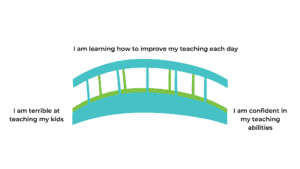
“Bridge Thoughts” are like the stepping stones you need to get across the river of negativity without drowning in it. If you’re sitting there thinking, “I’m just not good at this,” a bridge thought might be, “I’m learning and improving every day.” It doesn’t demand that you go from zero to a hundred, but it gives you a little nudge in the right direction. 

Kelsey explains it’s all about offering yourself some grace while keeping things real. You’re not instantly perfect, but you’re also not as stuck as you feel. It’s a middle ground, and guess what? It works.
Personalizing the Path: Crafting Your Bridge Thoughts

The beauty of bridge thoughts is that they’re yours to mold. It’s not a one-size-fits-all deal—what speaks to me might not resonate with you. So take a moment to think about what’s realistic for you, where you’re at, and what you need to hear. 

Let’s say you’re nervous about trying something new in your classroom. A bridge thought might be, “I’m open to exploring new methods.” Over time, that thought will evolve as you grow more confident.

Ladder Thoughts: Building Incremental Beliefs

Now, if you’ve got a bigger hill to climb in your mindset, that’s where “Ladder Thoughts” come into play. Imagine you’re climbing up a ladder, rung by rung, taking small but solid steps toward a more positive belief. 

Maybe you start with, “I struggle with engaging my students,” and as you work your way up, you begin to think, “I’m finding ways to connect with my students that work for both of us.” These thoughts give you the strength to keep climbing, instead of staying stuck at the bottom.

Real-Life Application: Creating Thought Ladders

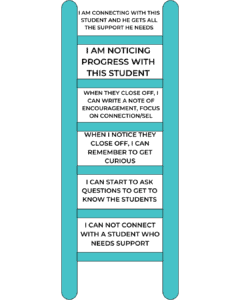
Alright, let’s look at how this actually plays out. Maybe you feel like you’re not reaching a certain student. Your initial thought is, “I just can’t connect with them.” Start small:

  1. “I can start asking more questions to understand them better.”
  2. “I’ll try a few strategies to see what sticks.”
  3. “I’m noticing small improvements in our connection.”
  4. “I’m making progress with this student, and I’m proud of the work I’m doing.”

By the time you reach the top, you’re thinking, “I’m connecting with my student, and they’re getting the support they need.” It’s not magic, but it sure feels powerful when you start seeing the results.
Revitalizing Your Teaching Journey

At the end of the day, whether you’re using bridge thoughts or ladder thoughts, what matters is that you’re moving forward, step by step. 

You’re not just a teacher—you’re human, and that means sometimes you’ve gotta work through the hard stuff. By practicing self-compassion and being open to a little mindset work, you’ll not only show up better for your students, but for yourself. So, take a deep breath, start small, and trust that you’re exactly where you need to be, climbing rung by rung toward something great.

Take our Podcast Quiz

Do you love Educate & Rejuvenate: The Podcast? Take our podcast quiz to get a personalized playlist of episodes you don’t want to miss! 

Connect with Kelsey:

Read the transcript for 2 Simple Hacks to Shift Your Teaching Mindset [#153] below:

How often do you find yourself thinking negatively about yourself or your teaching? Today, you’ll learn 2 simple hacks that will help you shift your thinking from negative to positive. Welcome to educate and rejuvenate the podcast, episode
100. Welcome to educate and rejuvenate the podcast to help you revitalize your teaching, renew your spirit, and reignite your passion for life. I’m your host, Kelsey Sorensen, a former teacher, current homeschool mom, published author, and certified life coach. Whether you are a teacher in a traditional classroom, homeschool from your kitchen table, or anywhere in between, I am on a mission to help you not only survive as an educator, but thrive. Get ready to up level your skills with incredible insights from guest experts and discover the missing piece, rejuvenating yourself. Are you ready to both educate and rejuvenate? Let’s go.
Everybody, welcome to the podcast today. I’m so excited to be here for this episode, and this is one that I’ve been really thrilled to record for a while. And I’ve actually, a while back, I was like, oh, yeah. My podcast episode about bridge thoughts and ladder thoughts. Like, there are concepts that I use. And again, you’re probably like, wait. What are you talking about? Don’t worry. I’m going to get into it.
I might have revealed what the 2 hacks are, but it’s something I’ve talked about a lot with my club members. And then I realized, wait. We do not have a podcast about this. Like, how did I get a 153 episodes in without sharing 2 of my absolute favorite hacks for thought work? And thought work is, like, where you’re thinking about your thinking and working on thinking more positively. Right? And these 2 simple hacks are just so simple. I mean, it’s really in the name. So I’m really excited to share them today. You are going to walk away from this episode with action, an actionable strategy.
In fact, 2 actionable strategies that are going to help you to shift your mindset when you find yourself thinking like, oh, I should have done this or, oh, I’m just such a terrible teacher or whatever might be coming to your mind, or I should not be teaching my own child. What was I thinking? And what, whatever it is coming into your mind, you’re going to find a way to shift that. And it’s not about toxic positivity. It’s not about suddenly going from, I cannot teach my child to I’m the best teacher ever. That doesn’t work. Right? Because we all try that from time to time. Right? We’re like, okay. I I’m I just need to think this.
But if it doesn’t work, if it doesn’t fit, if it’s like you’re trying to put on an article of clothing that doesn’t fit you, well, then it’s not going to work. So we’re going to talk about what is going to work. I’m really excited for today’s episode. And, again, this is gonna be 2 different ways to go from a negative thought you’re thinking to another. It’s one of the most popular tools that when I share it, I’ve done some events this year. And when I share this one, it’s just been really like, oh, I really like that one, and it’s in my book and people love this one. So I’m like, I thought it was the perfect one to share while I’m live on the teacher goals platform. So I do want to mention for those watching this later, this is actually a live podcast recording.
So I’ve got friends on the teacher goals platform and educate and rejuvenate platforms. So I’m going to bring them in a little bit during certain times. I’m gonna get participation. So you’re not only going to hear from me, but also what are some really sticky thoughts that a lot of other educators are having and how are we going to shift them? And we’re going to actually see this happen in real time. It’s going to be so cool. So the one last thing I want to mention before we dive into it is if you are listening to this on Apple or Spotify, I would actually highly recommend that you switch on over to either YouTube or our educate and rejuvenate app. So if you didn’t know, we have a mobile app now. It is free.
You can go download it in Apple store or Google play. Right now, the podcast is in there, and it is a video podcast in there. Now, the reason I’m mentioning that is I’m about to share my screen, and there are going to be some visuals that are really going to help you understand this. Because when I first taught this strategy, it was impromptu on a coaching call. Like, I was just mentioning it to someone. And, then afterwards, I went into our member group and I shared some pictures. And people who were there were like, oh, these visuals were so much more helpful to understand the concept. So I would love for you to actually see the visuals to go along with it.
I will try to describe them as well as I can for those of you who are on audio, or maybe you’re driving and you can’t switch it or be watching anything now. That’s totally fine. You can always go back and get it. So, again, download that educate and rejuvenate app. You’ll be able to watch the podcast in there too. I’m now going to share my screen. Okay. So today, we are going to be talking about a concept well, 2 concepts, Bridge thoughts and latter thoughts, which I mentioned before.
So when we use these is when we are having a thought, a negative thought. Right? Usually about ourselves or about a situation. It can be about teaching or about anything else, and we want to shift to something else. Right? For example, I have up here on the screen one about getting a potential job. I’ve had this come up a lot when I’ve been coaching. Whether it’s a new teacher who’s like, I don’t know if I’m going to be able to get this position or it’s a teacher going for an admin position or for going into more of a specialist position or whatever it is. A lot of times you’re like, oh, like, I wanna get this new job, but you might think there’s no way that I could get this job. Now it’s a jump to immediately just be like, oh, I’m the perfect candidate for this position.
Right? To jump from that thought to that. And so that is where a bridge thought can be really helpful because you could put this on your vision board and start saying affirmations like, I’m the perfect candidate for the position. You can totally do that if you want. There’s nothing wrong with that, but it might be even more helpful for you to do it with a thought that helps bridge that gap that feels believable right now so that you can go from one end of the bridge to the other. Right? So when you’re thinking there’s no way that I could get that job, a bridge thought is one single thought that helps you move from that side of the bridge to the other. So when you’re having one negative thought to the positive thought, you’re gonna have a bridge in between. Now the criteria for that bridge, like I mentioned, is that thought is believable to you right now. Like, you can be like, oh, yeah.
I am I agree with that, but it’s more positive than the thought that it’s naturally coming to my brain all the time. Because then you could remind your brain, no. There’s not no way I could get that job. It’s whatever this bridge size. So let’s look. I had a couple potential ones here, but I would love actually, before we do that, I would love to hear from those who are live in the chat. What do you think could be a potential bridge thought for this? In between, there’s no way I could get that job. Those of you who are live, put it in the chat.
So if you’re thinking there’s no way I could get that job, the perfect thought like, in an ideal world, I would think I’m the perfect candidate for the position, but I really don’t believe that right now. I I need to work my way over there. What is a bridge thought that we could have in between there? Oh, yes. I have some of those skills to potentially do this job. Oh, I love that. Right? They need me. Yeah. That’s a good one.
Oh, maybe they need me. It might not be the right school. Oh, yeah. Maybe it might not or may it might be the right school. Maybe this is the right fit. I don’t know. And maybe it’s more just open and curious in between. I might be qualified.
Yeah. Kind of adding a qualifier. A lot of times, qualifiers are really helpful for bridge thoughts. I’m learning that. It’s possible that I could. It might, Bethany, if I take this course, work there for work right and for whatever amount of time, then they will have expertise for this job. I love it. And, again, this is going to show that there’s no right or wrong bridge thought.

It is whatever bridge thought is right for you in your given situation. This is just an example to help you learn the concept. So here are a couple I put, and you’ll notice they’re both different than what we got in the chat, but we had some awesome ones in the chat too. So a bridge thought could be there’s no way I could get that job. Right? Or that would be the initial thought. Right? And then the bridge thought could be like, it’s possible that I could apply for the job. Oh, I could apply. There’s no way I’ll get it, but I could apply, and it’s possible.

Or maybe I have more experience than I think. Like, I’m telling myself there’s no way I could get it, but what experience do I actually have that could be applicable to this job? Just get your mind thinking in that direction. And some of these other great thoughts, maybe I can gain more skills and learn more. I love it. Maybe it’s a good fit. I have the potential to be a good fit. Danny, that’s so good. Erica, I I need to remember to say your name.

So when it goes on the podcast, you all get credit for it. Charity says, maybe it’s good fit. Bethany says, if I take this course where where I am for this amount of time, then I don’t have the expertise for the job. Heather says, I might be qualified. We have some great ones here. Danny, I have the potential to be a good fit. Lisa says, I have qualifications to get that job. Yeah.

And maybe I was like, I have qualifications. Maybe you don’t have all of them or something. But, again, people get jobs where they didn’t check every box all the time. Right? Okay, Gloria. I might fit into it. Yeah. I might. I just might.

Right? It’s also rethinking my skills and renaming them depending on the job. Exactly. Right? Just thinking like, oh, what skills do I have that actually do apply to this that might not traditionally, but they might still help. Right? And that’s the same line of thinking I had with maybe I’m more experienced than I think because it’s like, oh, maybe this job was actually perfectly preparing me for this one. There’s another bridge thought. Right? Like, oh, maybe maybe my current job has prepared me for this job. So many good thoughts here. So that is a bridge thought.

So simple. Right? It is one single thought in between the other thought. Another popular one that I don’t have on here is, for example, there’s no way I actually changed it to more of a teaching scenario, but the one that was here originally was like, there’s no way I could run a marathon. And then the one other over here was I can totally run I am ready to run a marathon or something. And then it was like, it’s possible that if I train, I could run a marathon. Right? Oh, I’m definitely not ready right now, but I could train, and then I could do it. Right? So, again, it doesn’t have to be teaching. This works for everything.
Oh, Christy is another good one. I might have the skills necessary for this job. That is perfect for this one here we have on our screen. Right? There’s no way I could get that job, the inter Christy’s bridge thought bridge thought of I have the necessary skills for this job. Right? And I’m the perfect candidate for this position. Like, amazing. I love it. Okay.
And, again, they have to be believable to you because maybe one person might think, oh, I actually don’t believe I have this or I might have the skills necessary. Maybe for them, it’s possible that they could apply or maybe for them, it’s like, maybe I could gain some skills and learn more. Right? It’s depending on the person. So that is where there’s not like a, oh, this is the bridge thought. It’s like you get to pick the one that works for you. So you really get to use your creativity with it as well. Okay. Let’s look at another scenario.
Okay. So here’s 1. I am terrible at teaching my kids. That is the initial current negative thought that is being served to whoever let’s call this person, I don’t know, mister Smith. Okay? Mister Smith is thinking, I am terrible at teaching my kids. And then the ideal thought, like, he wants to think, I am confident in my teaching abilities. But that’s a big jump. Right? And so having a bridge thought that’s believable right now can help us, like, move away from this one, start to build confidence in this one, which then leads us to the ideal thought eventually.
Right? So, again, I want to turn it over to some of our amazing teachers in the chat. What are some potential bridge thoughts that we could have for this scenario? Okay. Let’s oh, we have some already. Says, I can gain the necessary skills to connect with my kids. Oh, I love it because it seems like maybe this per maybe mister Smith can’t even believe that he has the skills right now, but he can believe that he can gain them. Right? I can gain the necessary skills. Charity, I am a work in progress. Right? Oh, yeah.
Like, I don’t have to be perfect. I am a work in progress. I love that. Erica says, let me research some strategies to help me become better. Yeah. Like, I can research. I can find some strategies to help me become better, become more confident, become more adapted, connecting with my kids. Let me brainstorm with my coworkers how to connect with the students.
I love this, Erica. Great comments here. Hannah says, I was just saying that today. I struggle with believing I’m a good teacher. I think I can say I’m using what I learned from last year to grow as a teacher. That’s a good one, Hannah, and this is a real one for you as you’re saying. You were just saying this today. And see how much she’s saying I think I could say.
It’s like, what thought is in alignment for her of what she thinks could help her bridge that gap. What is it unique? Because what you might need to bridge the gap might be different than what somebody else needs. Right? So I was just seeing that today, certainly made a teach good teacher. I’m using what I learned from last year to grow as a teacher. So like I learned, I’ve learned things from master and I’m growing. I love that so much. Clarissa says I can be okay with asking peers for help and advice. Yeah.
So it’s like, I’m terrible teaching my kids. Oh, I can use my connections. I can ask peers for help and advice and realize that, oh, these are things I can try. And maybe it’s also like, oh, they helped me realize that I’m doing better than I think they have these struggles too. A lot of times when we talk to other teachers and this happens all the time in our community, we realize like, oh, I’m not the only one who thinks that. Like, even Hannah just now was like, oh, yeah. I totally thought this. And I bet out of the now 851 of you through the teacher goals and educate more do make platforms together, some of you are like, oh, I think that too.
And then Hannah’s saying, I think that, and you’re all now feeling less alone. Right? Because you’re like, oh, I’m not the only one. Gloria says, I can plan some ideas that will help me. Yeah. Like, I can do this. I can plan some ideas that will help. Bethany says, once they get to know my kids better, they’ll trust me and I’ll get through. Oh, I love that because it’s like, I just need to give this some time really because I’m going to get to know them better.
And I will get through. Like, I’ve gotten through in the past, so that could be another thing. I’ve always made it through. But then we can just we could, like, create, like, a never ending list of potential bridge thoughts for any one given situation. Lisa says, I can teach my kids the skills that I have. I love it. Erica says, what can I do better and ask advice appears up here, observe? I love it. Katie says, yes, Hannah.
You nailed it. We all go through some of those days or seasons. Being a teacher is hard, but so rewarding at the same time. Absolutely. And, yes, more about observing someone who has better skills than I do. Anna says I can ask for feedback from other teachers on a struggle I’m having. Yes. Adriana on YouTube.
Woo hoo. Let’s see some other platforms here. I will focus on one thing I am doing well and then try another step. I love this. Athena says I don’t mind asking for help or advice. Yeah. So many great comments here. Sending the love.
Christie says it’s okay to admit I’m struggling and admit I need help and take that advice to be a better teacher. So many good ones. And those are all correct. Right? There’s no right or wrong. This is just an example I had here before we even did that. So again, the bridge is like any of these thoughts that we could use to put in the middle. So another example here that you can see on the screen could be, I am terrible at teaching my kids, and then I am learning how to improve my teaching each day, just like baby steps, and eventually, I am confident in my teaching abilities. Oh, and Erica says, I love the shift in identifying what is going well and how to grow from the negative thought.
Yes. We always love to look at what is going well. Right? What are we doing right? Look at our wins. That’s a big thing that has its whole section in the educate and rejuvenate book as well. It’s so important for us to retrain that negativity bias in our brain in general, and bridge thoughts and ladder thoughts are a way to help us do that as well. Okay. So we’re still on bridge thoughts. Wanna make sure we get to ladder thoughts.
So we’re gonna do just one of creating one together here. So I would love for somebody who is here live in the studio to put a negative thought they’ve had recently about teaching or really anything because, again, this doesn’t have to be teaching, but something that, anybody here might be able to relate to potentially. So we want the starting thought. We want what the ideal thought might be. And then together, we could come up with some potential bridge thoughts for it. Oh, here’s one. K. We’re going with the first one.
Christie says, I feel like I’m drowning. Let’s go with it. And this one’s kind of interesting because we’re seeing like a feel like this is what I’m feeling, but it also is a thought we’re telling ourselves. Right? Because you’re telling yourselves, oh, I feel like I’m drowning. And then if you’re ruminating in that thought, then it might even cause an, like, another emotion. Right? So this one could get really interesting to actually do some coaching on too. But right now we’re just gonna do a branch thought. So I feel like I’m drowning.
What would be the ideal thought instead of I feel like I’m drowning? And maybe Christie, maybe if you want to answer that one, cause I wanna know this is your thoughts. What is your ideal thoughts? I feel like I’m drowning. What would you like to think instead? I’m putting you on the spot a little, Christy. So thank you. Some other great ones. We could definitely do bridge thoughts here with 2. And may we will get to latter thoughts too. Okay.
Erica’s got some great potential bridge thoughts here. I’m headed to the right direction. I love that. Oh, that was a good one. I cannot connect with a student who needs support. That’s another good question. My team started that one, so maybe we’ll come back to that one with ladder thoughts. Oh, but with the help of others, I will begin to float.
Oh, that’s a good one. So, Christy, do you believe that right now? With the help of others, I will continue to float. What is the ideal like? I feel like I’m drowning. I am rocking it as a teacher, maybe. Like, if you’re just like dream world, what would that thought be? Right? Again, let me know if that sounds off base. If that’s a different thought, Christy, then is your ideal. Or maybe let me know. Is this one you didn’t quite believe right now? You could let me know that too because then that wouldn’t be a bridge thought for you.
I’m putting some of the examples from the chat. I can take it one step at a time. I can make the list and I’m just shortening yours, Erica, but I love it. I can take a, make a list and prioritize. Love it. I will become the student’s favorite teacher. Oh, I love that. I’m gonna put that as potential ideal thought.
I will become the student’s favor. Oh, okay. Did a space in the wrong spot and apologies to everyone listening that my hand is hitting the mic a little bit right there. Sorry. It’s a little unavoidable since I’m right handed. Well, I guess I have to use both my hands for typing anyway. So I’m sailing through this year. Okay.
Christy said, no, I believe this today. So these are great thoughts. Yes. So any of these would be a great bridge thought and these could be potential, like ideal thoughts, right? This is really as much an art as it is. It is a science because we are rewiring neuro pathways in our brain. In the book, it really does actually explain the science behind this, because we go in-depth about thought work and about, like, why our brain thinks the way it does and all those things. For now, on this podcast, you can just be like, yes. This works.
It is science backed, and it’s also an art because there’s not one right or wrong in here. And that’s what I love about this work and about the self coaching model we use, which we’re not going to get into on today’s podcast. But a lot all of it is like art and science together, and I just love it so much. Okay. So that is bridge thoughts. So now we could have done one more, but we’re gonna move on to latter thoughts just so we we don’t take all day. Okay. So a bridge thought, like we mentioned, is 3 thoughts.
It’s a beginning and ending and a thought in between. Now sometimes, it might feel like a huge stretch to even just have one thought in between. So a bridge thought is where it’s like, I just need one thought to help me bridge the gap, then that feels like enough. A latter thought is when even trying to just have one thought is way too huge of a jump. Like, this is just such a huge hurdle for me, or maybe I really do just wanna make take super baby steps. There’s no right or wrong to this. I mean, in a way, like, it says 2 hacks. Really, they’re kind of the same hack using thoughts to build on each other, but louder thoughts are where there’s at least 2 in between.
Now it doesn’t matter how many. This is just what Canva pulled up, but you could always get a bigger ladder or you could just have 2 in between. It’s up to you. Right? And we have this for you in your we have both of these actually for you in the educate and redo make workbook. So make sure that you claim that so you can do these. I just wanna mention that while I thought of it. So louder thoughts. This is an example that came from my book.
So for example, I’m not worthy of love. That is one that’s quite a big jump to I love myself, like going from, like, I don’t even think I’m worthy of love. I’m a despicable human being or something like that. That’s so sad for anybody who thinks that, but I know that people do. I mean, there there was a point in my life where I had thoughts like this. Like, not right now, but, yes, there was. And I’m sure others of you have too of the 926 currently people watching this. Again, that but that’s a huge jump.
Right? Going from that from I’m not worthy of love to I love myself to self love. So what would come in between is a series of thoughts. Right? So this is an example from my book. So it might start with I’m not worthy of love, and then it might be realizing like, oh, I am a person, and humans deserve love. Right? I am learning that I deserve love. Okay? Like, humans deserve love. I’m learning that I deserve it too. Then it’s noticing there are some lovable things about me.
Do you see how it’s all baby stepping up the ladder? And then I am worthy of love is the next one. Like, I’m worthy of love, but I don’t love myself yet. But everybody’s other people love me, and I’m totally lovable. And then the final one is, okay. Now I got to the top of the ladder. I do love myself. My ideal thought, I’ve, over time, gone from thinking I’m not even worthy of love to having self love. So that’s a big one.
Right? And it doesn’t have to be that big either, so don’t feel like your example is like, oh, wait. Oh, that’s huge. Like, that’s deep. I mean, it is. This one’s very deep. But you can use this for anything where you just want, like, more than one thought in between. Like, we’ve done this about teaching situations too. I actually think the one we have starred, I cannot connect with a student who needs support.
Like, even that one might maybe you need more than one thought in there. So that might be a good one. Are you up for You up for that? Love this. I think baby steps are what I usually need. Yes. And it can be for anything. Right? Even the ones we did bridge that score, like, you could do more. Right? Like, I feel like I’m drowning.
Yeah. That might maybe you do need more than 1. Maybe you even need some of these, like, in an order. Right? And but the thing is they need to be working up. It’s not just a random list of thoughts. It’s like they’re working up their way up. They’re going up in positivity. Right? Okay.
Yes. You are ready. I love it. So I’m not worthy. Oh, wait. No. We’re doing the example. Okay.
What was it again? I’m gonna put it back up so I can get on here. I cannot connect with a student who needs support. Okay. Let’s look at this. So now we need to look at what I cannot connect with a student who needs support. Now, again, might need to make this a little bit smaller so you can read it. Now we’ll come up with a series of thoughts. Right? What I usually like to do and, again, there’s no right or wrong that maybe you just wanna build your ladder and see where you end up.
You could do that if you want. I do like to look at what is the ideal thought. Like, what is it you want to think about it? And you could put it here or here depending on how many thoughts you need. For now, I will just put it here. I would just put, like, maybe something. I’m connecting with this student, and he gets all the support he needs. I mean, I just kinda put the opposite of it. So we’ll go with that for the sake of this podcast unless I hear something else.
So I’m connecting with this student, and he gets all the support he needs. Right? That’s probably what we’re going for, the opposite of this thought. What would get us one step closer to that that is believable right now? Melissa, what is a thought that says step above this that you would believe right now? But you’re like, oh, yeah. This totally rings true to me. And I love these examples here. I can get to know the student better. Yeah. And again, Melissa, tell me what is believable to you.
Heather’s idea, have grace with yourself and celebrate each step you make forward. Okay. Lisa says I can find out what the student likes. Yes. Right? I can start to ask questions to get to know the students. Yeah. And that’s something you believe right now. So let’s put that.
And I love all these suggestions for everybody too. I can start to ask questions to get to know the student. Okay. So that is believable to Melissa right now. So we’re putting that on the next rung of her ladder. So she can every time this thought comes up, because it will come up again, you can redirect and be like, oh, no. Now I know. Also, yeah, my brain is throwing me this, but I also know that I can start to ask questions to get to know the student.
My stumper is what to do when they close off. And that’s what questions are for. Right? That’s and again, that’s where we can ask ourselves and ask even talk to them and be like, What what is happening here? Getting curious rather than frustrated can really help in situations like that. I can build rapport with the parents and the children. Yes. I love all these. Okay. So with this ladder, what we wanna do is make sure these thoughts are building up.
Right? So this next one, Melissa, would be one that, like, you feel like you’re close to believing, but you still don’t believe it quite yet because this is where you’re at on the ladder. Right? This is, like, where you feel like, okay. This is where I’m at. What would be yes. Oh, look. Eric is on it. So your sticking point is when they close off. When they close off, I can write a note of encouragement.
Or, yeah, I like the whole when they close off, and I like the note of encouragement. Melissa, what feels good to you? When they close off because this is something you’re gonna try to work on. Right? You’re like, this one’s legal right now. You’re worried about when they close off. I I love that we ran with that because that’s what you said. What do I do after questions? When they close off, I focus on connection maybe. Because sometimes when they close off, it’s because they feel disconnected. Right? I don’t know.
Tell me if that rings true to you or if that feels like I can focus on connection or I can ask what they need. When they close off, I will use social and emotional supports. Right? I love that. That could be a good time. Yeah. Like Jeremy said, to be like, maybe let’s do some social emotional learning. Let’s tap into our feelings. Right? Or even do, like, a little meditation as a class or something.
Like, just hit few minutes for that or a a brain break. And moving your body can help to regulate your nervous system. We talk about that in the book. Now you would customize this ladder. How you feel is good. Here, it might be like you’re trying these things. Wait. I am noticing progress with students.
Yes. Not taking it personally. I will remember not to take it personally. Yeah. It could also be like, I I’m realizing that it’s information. Right? It’s information that you don’t need to take personally. Like, it’s data. Right? And it’s like we can.
It’s qualitative data, not quantitative data. Right? But it’s information that we then use to make decisions, and that’s then what you would do here. This might even be, like, on connection SEL, and that could be regulating yourself even. Like, what can I do to help me remember not to take it personally? Oh, these are such good questions, Melissa. I feel like adding that to your bridge or your ladder here for 1 could be really helpful. I’m trying to figure out when they close off. This is kind of like an art as much as it is a science. They need to know they can trust me and I’m not going to let them down.
I even wonder if that needs to go lower on the ladder. I’m going to move these up. When I notice they close off, I can remember it’s not personal. I can remember to get curious. Because when you get curious, you’re not taking it personally. Right? Then you’re just tapping into curiosity like, oh, I wonder. Instead of like, oh, this means that I’m a terrible teacher. Right? I cannot connect.
It’s like, oh, no. I’m gonna get curious. Why aren’t they connecting? Why aren’t we connecting? It’s such a shift. Right? Because if you’re thinking when we talk about even the self coaching model and how we think impacts how we feel. Right? When you’re thinking I cannot connect with this student, is that leading to connection? Is that leading to us actually getting curious and figuring out what’s going on? So if we’re trying to force some of these before getting to this, then it might. Yeah. So we kinda gotten to some other stuff here too as we’re building this ladder, but I always think whatever comes up is what’s meant to come up. So I love it.
I love this direction that we just went on. Gloria says I can give them time and then try social, emotional learning. Yes. Clarissa said, agreed, Erica. As long as I try to put my best foot forward, I cannot take their reaction personally. Yes. Look at them as they are children. Yes.
They’re children. And they’re absolutely children who we are not gonna take it personally. Right? We’re going to give them time, and we’re going to give ourselves time too because it’s going to take some time for us to connect. So is there something after progress or would that be it? And, again, that would be up to you, Melissa. I actually encourage you. So this could be like, I’m noticing progress. And then maybe after that, you do connect or maybe you need another thought. I don’t know.
That’s up to you. It’s up to whether you’re able to bridge that gap. If you’re like, oh, I fully believe this. I don’t believe this. Then you find another one in between that you believe. But again, there’s no limit of how many you can do. This is just the one Canva graphic, but like you could always duplicate it or find a different graphic or whatever you need to do, or just do it on like a scotch piece of paper. So hopefully that helps everybody to understand, the bridge and the ladder.
Jeremy says, make sure the students have all the social emotional learning support they need to the best of my abilities. Yes. And that helps so much. And when we do social emotional learning with our kids and we do it on ourselves too, that’s actually, if you notice, with these, like, looking at shifting our thoughts, like, a lot of the educator and roommate book is actually adult social emotional learning. And when we do this work ourselves, it makes it so much easier for us to do it with the kids as well. Lisa says there are things going on in their lives that may not have anything to do with us. Absolutely. So we don’t need to take it personally, right? If we are showing up and we are doing our jobs and we are helping those kids, if we are get, and especially if we’re able to get out of our own heads about it and get curious and dig into what is it they need, how can I support them, and maybe it’s not educationally right now? Maybe think maybe something else before that education part comes.
Right? Sometimes that’s needed. This was so good. I’ve loved this conversation that we’ve all had together here today. So I hope that this helped you understand these two awesome concepts of bridge thoughts and ladder thoughts. Now again, remember, these are just to the bridge thought is what helps you to bridge your current thoughts to the ideal thought. You have a bridge thought in between that bridges the gap between the 2. So it’s just one thought in between and then the latter thought is the current thoughts, the ideal thought at the top of the ladder, and as many thoughts as needed as you climb up that ladder. So I love both of these.
You always get to pick when to use each one, whichever one feels the most ideal in any given situation. If you feel like there’s a bridge thought that, okay, this thought’s gonna get me there, then wonderful. Do the bridge. If you’re like, this is one where I’m really going to need to baby step my way up, then do the latter. And I hope you that you find this helpful. This is just one of many concepts that I teach in the educate rejuvenate book. Oh, you ask, can I do these thought shapes with students? Absolutely. I recommend that you do.
In fact, we do have for those who are in educate and rejuvenate club, who purchased a copy of the book, we have a student version of the workbook is it was an extra bonus to our members. Anybody who’s a member who purchased that, make sure that you check your email for that. Or if you missed it, email us at hello at educate and rejuvenate.com. This may be a good method to teach our schools older grades. Yes. And it definitely is like at a certain point, right? Yes. This would be considered social and emotional learning. Yes.
I’m not gonna get into all of that today for social, emotional learning, but I do have a podcast that’s all about the core social, emotional learning competencies. It’s towards the beginning of the podcast. So be sure to check that out if you wanna learn more about social emotional learning with students. We’ll probably have more to do with that too as well. And the interview I actually just did with Lana Penley to check that out as well. We have some awesome podcasts about social emotional learning. Clarissa says she learned so much. I love it.
Again, this is one of many concepts you will learn in the book, educate and rejuvenate. So if you have not cleaned your copy yet, you can absolutely do that. Once you get your copy of the book, it really helps us out if you leave a review of the book. It is one of the best things that you can do to help. It’s the best thing you can do to help us get this book in front of more teachers. We really want more teachers to know about how they can shift their thinking just like we did on the podcast today, how they can tap into their emotions. There’s so much more of the book than just what we went over today. We’d love for you to help us get the word out, and leaving a review on Amazon is one of the best ways because the more reviews, the more Amazon will push it, the more teachers will know that this book is for them.
Erica says she cannot wait to download and read it. Let’s just read a couple of the reviews for the podcast so those who are listening can hear. Here’s what Hannah had to say. Hannah’s here in the chat. I love how her review is right up here. She said, I absolutely love this book from debut author Kelsey Sorensen. If you are in education, this book needs to get into your hands immediately. This book helped me build self awareness, and because of it, I am creating habits as an educator to make it a lifestyle change.
Kelsey’s 3 step framework for revitalizing your teaching will leave you a better leave you with a better idea of how to navigate the trickier parts of education. One of my favorite quotes from the book is remember your thoughts don’t hold authority over you. By assuming the role of observer, you unlock the ability to choose which thoughts to accept and which thoughts to graciously release. This really speaks to who I am as an educator because there are many circumstances in the field of education that may or may not be within my control, but I can always choose how I think about them. And after reading this book, I choose to think about them in a more positive way. This then leads me to having more compassion for myself as well as the students I serve. Kelsey also includes a free PDF workbook, which I show all of you. You can download and work through as reading the book.
I highly recommend it. Here’s one that just came in from Kirsten. She said, I participated in the educate rejuvenate conference as a presenter and participant for the last several years in this book. Truly takes the cake. I truly admire and appreciate Kelsey’s view on teaching and life. Let’s face it. Teaching is hard work and exhausting. Kelsey’s framework for rejuvenating your passion for education is contagious.
Not only is she a coach and a former elementary school teacher, but she is also a passionate and compassionate human. Oh, she’s so nice. Who understands the plight of teachers in this day and age, both public school teachers and homeschooling moms and dads. She invites teachers to accept, feel, and reframe their emotions, and ultimately do what’s best for them and their students. This book is amazing for teachers who go burned out, overworked, and overwhelmed. I highly recommend it. So those are just the first two that happen to pop up. I love them, but every single one of these reviews has just made my day.
And again, they can be short. Like, don’t overthink it. This one was really short here. Trinity said she wishes she was gifted at writing a review. You don’t need to be gifted. Just write whatever comes to your head, whatever comes to your heart, whatever helped you. Bethany says beautiful. I love it.
Oh, I love this one. Honest honestly moment. I just started reading this book and haven’t finished yet, so I can update my review then. But so far, I’m loving all the real life examples Kelsey gives with the principles. Instead of just teaching the what, she goes a step further by demonstrating the how by relating these situations she’s seen in coaching. I related to Ashley in chapter 1 a lot. As you can see, I’m already taking a lot of notes in my Kindle. Excited to see what comes next in the book.
I appreciated the metaphor observing like a student teacher that’s giving me a new perspective. I also love that most of the metaphors directly relate to teaching. So, yes, I did try to tie it into teaching, so I love that. So, again, grab the book if that doesn’t give you enough reason to go over to Amazon right now and snag your copy. I would just definitely recommend going and doing it. And then if you would, like, love to leave a review once you’re familiar enough with the content that you feel good doing that, I would appreciate it. I just really appreciate all of you being here with me tonight or whenever you’re listening to this episode or watching it on the new educate and rejuvenate app. So you can see all the visuals.
I hope that these 2 hacks, the bridge thoughts and ladder thoughts help you to shift your mindset. There’s so much more to this book though. So make sure that you grab your copy and make sure that you’ve subscribed to educate and rejuvenate the podcast as well to get tips like this in your earbuds for free each week too. I’ll talk to you next week. Goodbye, everybody.

Thank you for joining me on educate and rejuvenate the podcast today. If you love what you heard in this episode, be sure to hit subscribe so you don’t miss the next one. And if you’re hungry for even more, be sure to check out the book that I wrote. It’s called educate and rejuvenate a 3 Step Guide to Revitalize Your Teaching, Renew Your Spirit, and Reignite Your Passion For Life. It takes everything you learn here on the podcast and that I teach our members inside the Educate and Rejuvenate Club into a guidebook you can refer to again and again. 1 of our early readers said it was like clarity for her brain. Plus, it’s not only a book. With your purchase, you’ll get a full PDF guide with exercises and links to videos and more so that you can not only consume, but apply everything that you learn.

If you’re ready to make educate and rejuvenate

not just a podcast you passively listen to, but

Kelsey Sorenson00:37:08 – 00:37:20

0:00 – 37:20

a lifestyle that you put into action, it’s time to grab your copy on Amazon today, or head to educate and rejuvenate.com/book to read the first chapter and the introduction today.

More about Educate & Rejuvenate: The Podcast

Being an educator is beyond a full-time job. Whether you’re a teacher or a homeschool parent, the everyday to-do list is endless. Between lesson planning, grading, meetings, and actually teaching, it probably feels impossible to show up for your students without dropping the ball in other areas of your life.

Educate & Rejuvenate: The Podcast is the show that will bring you the teacher tips, practical strategies, and inspiration that you need to relieve the stress and overwhelm of your day-to-day. Your host, Kelsey Sorenson, is a former teacher and substitute turned homeschool mom. Tune in weekly to hear Kelsey and her guests cheer you on and help you thrive as a wife, teacher, and mommy. Because with a little support and community, you can do it all. To access every single Educate & Rejuvenate resource, join the club at educateandrejuvenate.com/club.

Leave a Reply

Your email address will not be published. Required fields are marked *

Educate & Rejuvenate is the virtual teacher conference that you can not miss! Find out more about our summer and winter events. 

Inside Educate & Rejuvenate Club, you will get access to our weekly teacher-life coaching AND our Pre-K to 6th grade resource library to achieve more of a work-life balance.

kelsey sorenson

Hey there, new teacher bestie! I’m Kelsey, and I created Educate & Rejuvenate just for YOU! I blog about teaching and create elementary school and homeschooling resources to make your life easier. Be sure to sign up for my FREE email newsletter!

Then, follow me on Instagram and join the Facebook community to stay connected. I can’t wait to connect with you!

Oh, and don’t forget to listen and subscribe to Educate & Rejuvenate: The Podcast.

Let's Connect

Sign Up for Free Sub Plans!

Grab your FREE sub plans and you’ll be subscribed to get news about upcoming events, blog & podcast updates, subscriber deals, and more via email. You also agree to our privacy policy.

Mindset Masterclass

Join us for this FREE webinar to help you deal with feelings of overwhelm and bring balance to your life!

COOKIES

This site uses cookies.  Read our privacy policy to find out more.